
24/7 Emergency Line Open
Emergency Leak Detection in Cottonwood, AZ: Finding Hidden Water Before It Does More Damage
The water bill doubled, a ceiling stain appeared, or the house is quiet except for a trickle nobody can place. Call and describe what you see. A plumber serving your area can then begin tracking it down.
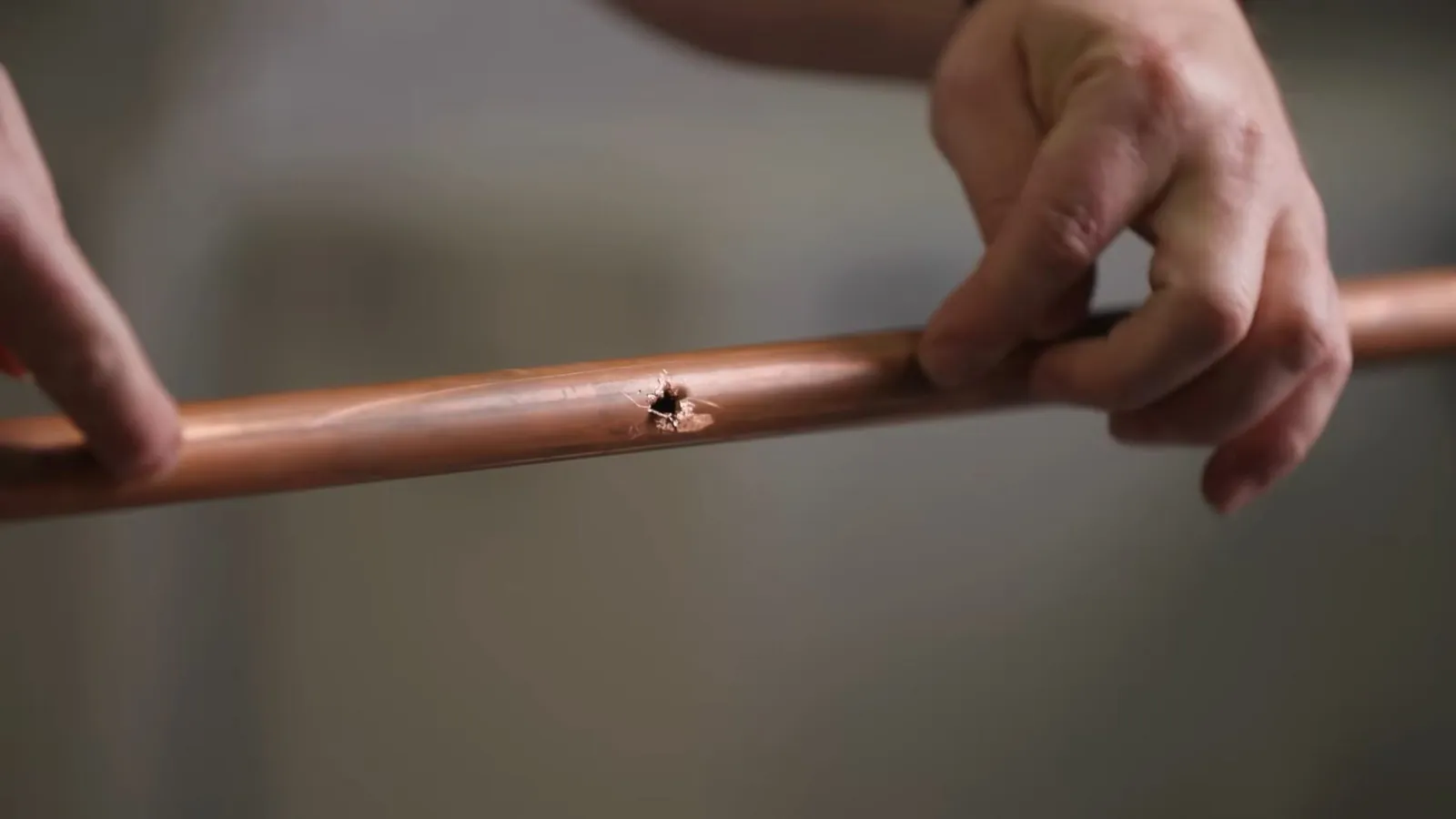
Check first
Is water leaking right now? A meter test settles it in about 15 minutes
Most homes have a main water meter near the street or the property line. Its dial or small triangle moves whenever any water passes through, even a slow drip. That makes it the simplest way to tell a real leak from a bill that is high for other reasons.
- Turn off every tap, the dishwasher, the washing machine and the ice maker.
- Open the meter lid and look at the low-flow indicator, or note the dial position.
- Wait 15 minutes without using any water, then look again.
- If the indicator is spinning or the dial moved, water is escaping somewhere in the system.
Not sure which water system serves your address? The water bill names the provider. For a City of Cottonwood account, the Water Operations line is (928) 634-0186, ext. 3306.
Where hidden leaks tend to show up, and what each sign usually means
Callers rarely say “I have a pressurized line failing in a wall.” They say the floor feels warm, the cabinet smells musty or the shower pressure has dropped. The table below pairs what you notice with where a plumber usually starts looking.
| What you notice | Where the water may be | What the plumber checks |
|---|---|---|
| Meter moves with everything off | Supply line between the meter and the house, or a line inside the walls | Pressure on the supply, then each branch isolated by valve |
| Warm spot on the floor | A hot-water line running under the floor | Heat pattern and the sound of water along the suspected path |
| Ceiling stain that grows | A supply or drain line above, or a roof problem | Whether the stain changes with plumbing use or only after rain |
| Musty cabinet or damp baseboard | A supply stop, trap or fitting nearby, or a wall line behind | Moisture readings around the fixture and behind the wall |
| Hissing or ticking in a wall | A pinhole or loose fitting on a pressurized line | Acoustic listening along the wall and pressure drop on the line |
| Pressure drops for the whole house | Main line or a service connection | Static pressure at the hose bib, then a pressure test |
A table like this narrows the search. It does not replace a visit, because the same sign can come from more than one source.
How a plumber locates a leak without opening every wall
Good leak work removes guesses before it removes drywall. Electronic listening gear picks up the sound water makes as it escapes under pressure. Thermal imaging shows temperature differences where hot water or evaporation cools a surface. Moisture meters confirm what the imager suggests.
When the tools point to a line but not a spot, a pressure test finds out whether that section holds. The plumber isolates a branch with valves, pressurizes it and watches the gauge. A branch that holds is cleared, and the search moves on.
Some homes also call for a camera check of the drains, which is covered on the camera drain checks.
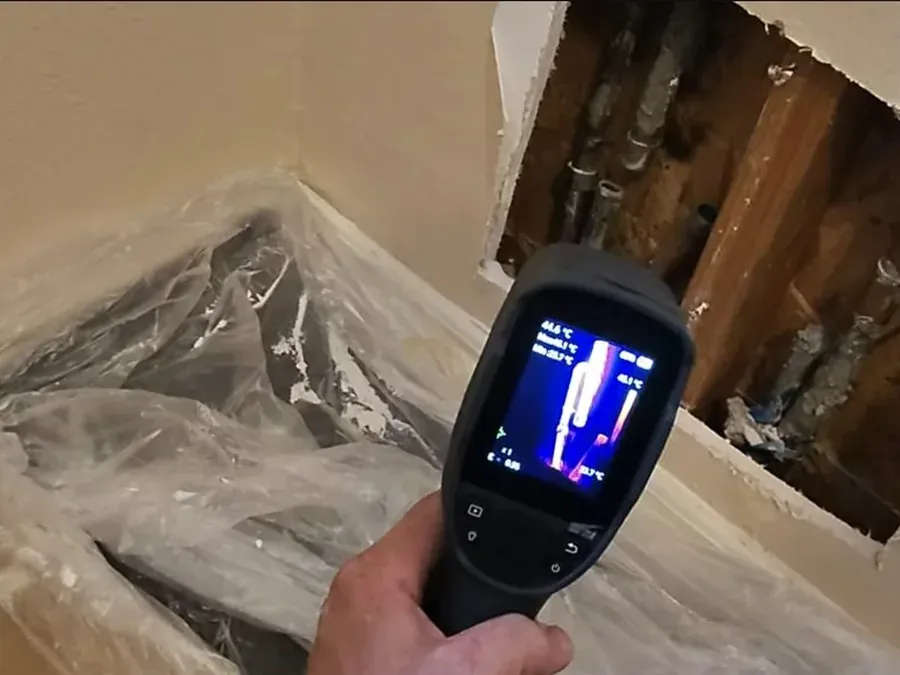
Dispatch can talk you through the first steps while the job is lined up.
Repairing the leak once the source is known
The repair depends on what failed and how reachable it is. A loose compression fitting or a worn supply stop is a short job. A pinholed copper section or a split plastic line may need a cut-out and a new piece joined in. A line buried in a wall or under a floor can mean opening a small, clean access hole just where the tools said to.
Ask the plumber three things before work begins: what failed, what the repair will involve and whether it needs a permit. Whether a permit applies depends on the scope of the work. Community Development, (928) 634-5505, can say where a given fix lands, and the plumber should already have a view.
If the leak has already soaked flooring or drywall, drying out soaked flooring is handled by water removal and drying crews, and the plumber can say when it can start. The plumber who fixes the line can tell you when the pipe work is done and the drying can start.
A pipe condition check can settle the question before anything is opened
Some callers have no obvious sign, only an old house and a worry. A plumbing inspection looks at the visible supply lines, shutoff valves, water pressure and the condition of fittings. Static pressure that runs very high can strain joints, and the plumber can test it at a hose bib in a minute or two.
A pressure test of the plumbing lines, sometimes called hydrostatic testing, goes further. The plumber isolates a section, holds it under pressure and watches the gauge. If the needle falls, that section is losing water, and the search narrows to it. Humidity can hide leaks in a bathroom, where steam and a slow drip look alike, so a test beats a guess.
If your home has a crawl area or an accessible space under the floor, say so when you call. The plumber can often look at the lines there directly instead of working from the surface.
Dripping faucets, running toilets and other small leaks
Not every leak is hidden. A toilet that refills by itself every few minutes can waste a surprising amount of water, and it is often silent. Drop a few drops of food coloring into the tank, wait without flushing, and look in the bowl. Color that reaches the bowl means the flapper or fill valve is letting water through.
Faucet drips, weeping shower valves and loose supply connections under a sink are the usual small sources. Caught early they are small jobs, and left alone they get costly, because the cabinet floor below tends to rot first. For those jobs, see fixture repair for faucets and toilets.
Wet ground, freezing nights and monsoon storms: what is plumbing and what is not
Cottonwood has real winter cold. Federal climate normals for the Tuzigoot station, between Clarkdale and Cottonwood, show about 67 mornings a year below freezing. Exposed hose bibs, outdoor shutoffs and lines along exterior walls are the usual casualties, and a split line often leaks only after the thaw.
Summer brings monsoon storms, which can leave a crawl area or a yard wet for days. A simple test helps: if the damp spot appears only after rain, look at roof runoff and grading first. If it shows up in dry weather, or the meter moves, water is escaping from a pipe.
Sprinkler and irrigation leaks are a separate trade, so they are not handled here. Your irrigation installer can check valves, heads and the zone lines that feed them.
Outside the house, a wet patch between the meter and the foundation may point to the supply line itself. That job belongs with water supply line work. Older lines that keep failing in different places may call for repiping instead of another patch. If you suspect water under a concrete floor, slab leak detection starts with confirming what your home was built on.
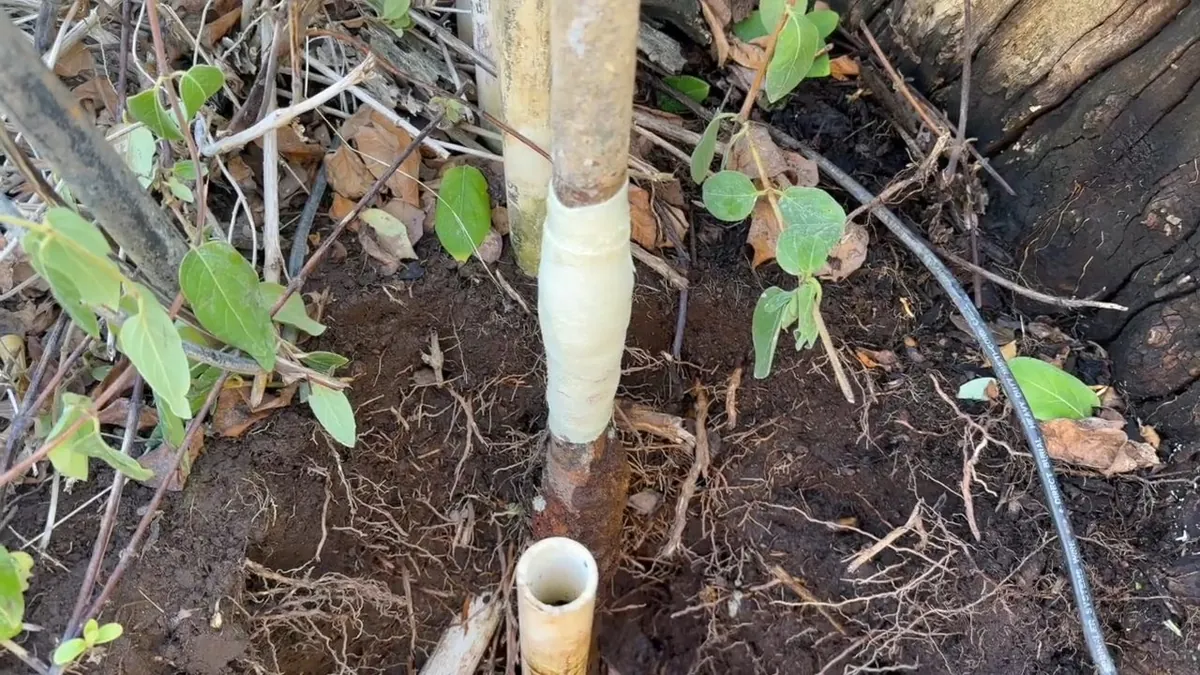
Call, describe the sign you found and give your Cottonwood address.
Questions homeowners ask about leaks
How do I know if I have a hidden leak?
Run the meter test: with every fixture off, a moving meter means water is escaping somewhere. Other signs include a bill that climbs without a change in use, warm patches on the floor, musty smells and the sound of water when the house is quiet.
There is a wet spot outside near my water valve. What should I do?
Close the main shutoff at the house and see whether the spot stops growing. If it does, the leak is on the supply side. Note where the spot is, take a photo and call, because the line may need a locate before anyone digs. Arizona requires two full working days of notice to 811 before digging.
How would a leak be checked at a rental property with a high water bill?
The same meter test applies. Ask the tenant not to use water for 15 minutes, then compare the meter. If it moves, the plumber isolates the unit, the shared line and each fixture until the source is found. Written notes on what was tested help the owner and the tenant both.
Is there a leak I can wait on, and one I cannot?
A slow drip at a faucet can wait a day or two. A spinning meter, a ceiling stain that grows or water near outlets cannot. Close the shutoff, keep clear of wet electrical items and call right away for anything that is active.
Say what you notice, and dispatch will tell you if it sounds like plumbing.