
24/7 Emergency Line Open
Emergency Slab Leak Detection in Cottonwood, AZ: Warm Floors, Damp Spots and a Meter That Will Not Stop
A patch of floor feels warm underfoot, or the meter keeps turning with every fixture off. Before anyone talks about breaking concrete, a plumber serving your area can help you work out whether the water really is under the floor.
Step one
Confirm what your home sits on before calling it a slab leak
The phrase gets used loosely. A home can sit on a concrete slab, on a raised floor over a crawl area or on a basement, and the repair depends on which one you own. So the first job is finding out.
- Walk the outside of the house and look for small vent grilles or an access hatch near the ground. Those usually mean a crawl area.
- Check whether the garage floor and the living floor meet at the same level.
- Look through any plans, permit papers or inspection reports from the purchase.
- Tell the plumber what you found. A quick look at the supply lines usually settles it.
Signs that water may be escaping below the floor
No single sign proves it. Several together, plus a meter test, make a strong case.
- Warm or hot patch on the floor
- Sound of running water at night
- Meter moves with everything off
- Damp carpet or baseboard
- Hot water takes longer to arrive
- Higher bill with no change in use
A warm patch is the classic clue, because hot lines often run under the floor. Damp carpet along one wall can point to a line close to that wall. A bill that climbs with no new appliance or guests is worth a meter check even when the floor looks dry.
If only the hot side seems affected, the line to look at may start at the water heater, so mention the heater when you call. Heater problems themselves belong on the water heater repair page.
How the leak is located without tearing up the whole floor
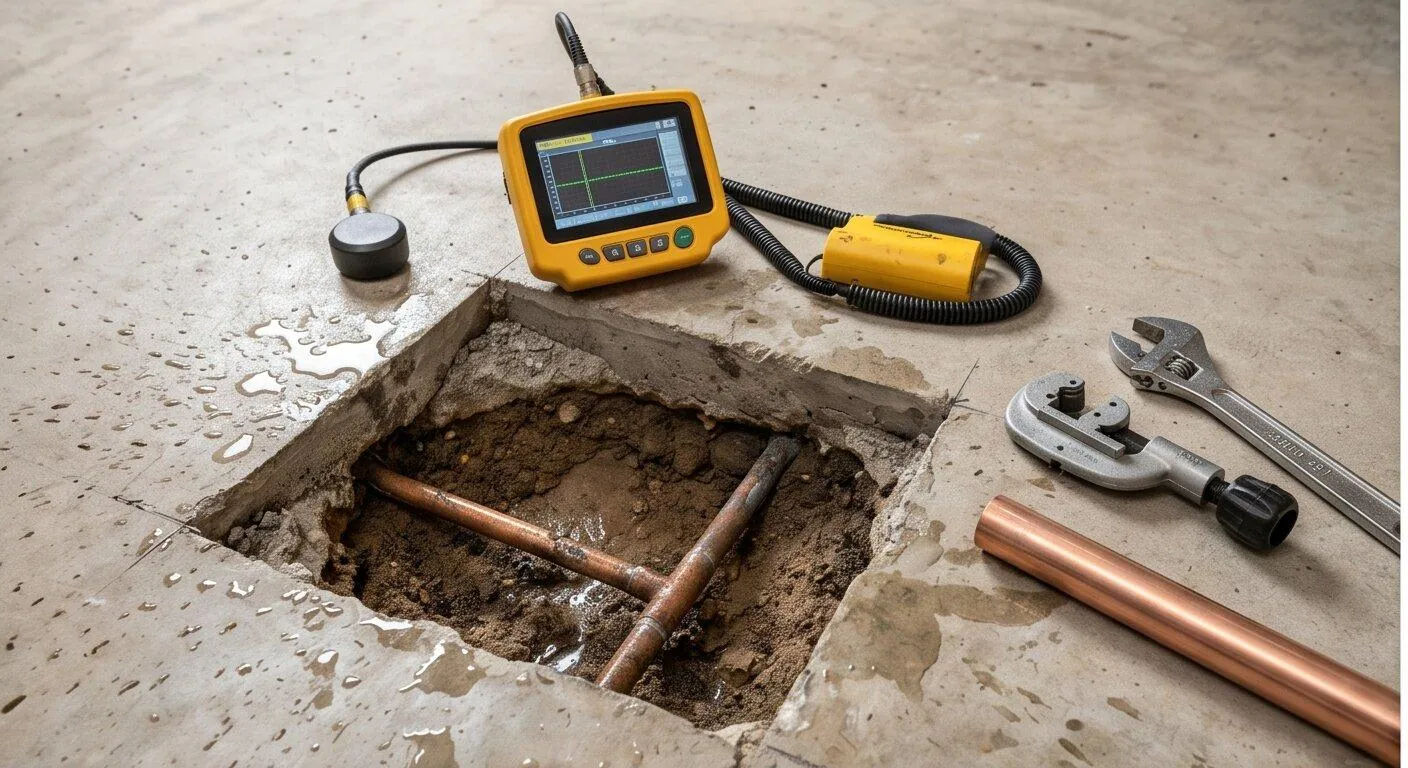
Locating comes before repair. A plumber closes valves to split the house into hot and cold sections and sees which one loses pressure. Then acoustic equipment is moved across the floor, because escaping water makes a sound that carries through concrete. Thermal imaging adds a second opinion where hot water is involved.
| Step | What it tells the plumber |
|---|---|
| Pressure test on the hot side | Whether the loss is on a hot line, and how fast it drops |
| Pressure test on the cold side | Whether the cold supply is also losing pressure |
| Acoustic listening on the floor | The area where the sound of escaping water is loudest |
| Thermal scan | Warm paths that follow a hot line under the surface |
| Line tracing | Where the pipe runs, so the access point is as small as possible |
Finding the line is the same discipline used for any concealed leak. For leaks that are not under a floor, see the page on finding a hidden leak.
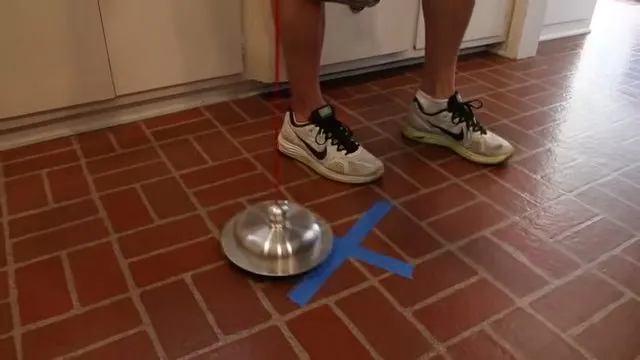
Dial in and start with the questions that narrow down the source.
Repair choices once the leak is found
There is more than one way to fix a leaking line under a slab, and the right one depends on the pipe, its location and what the floor above looks like. The plumber should explain the options in plain terms and say why one fits your house.
| Method | What it involves | Where it tends to fit |
|---|---|---|
| Spot repair through the floor | Cut a small opening, expose the line, fix it, patch the concrete | One clear leak in an accessible spot |
| Reroute the line | Run new pipe through walls or the attic and cap the old one | Lines with several weak spots, or a hard-to-reach location |
| Epoxy lining | Coat the inside of the existing pipe to seal it | Pipe that is intact but beginning to fail from the inside |
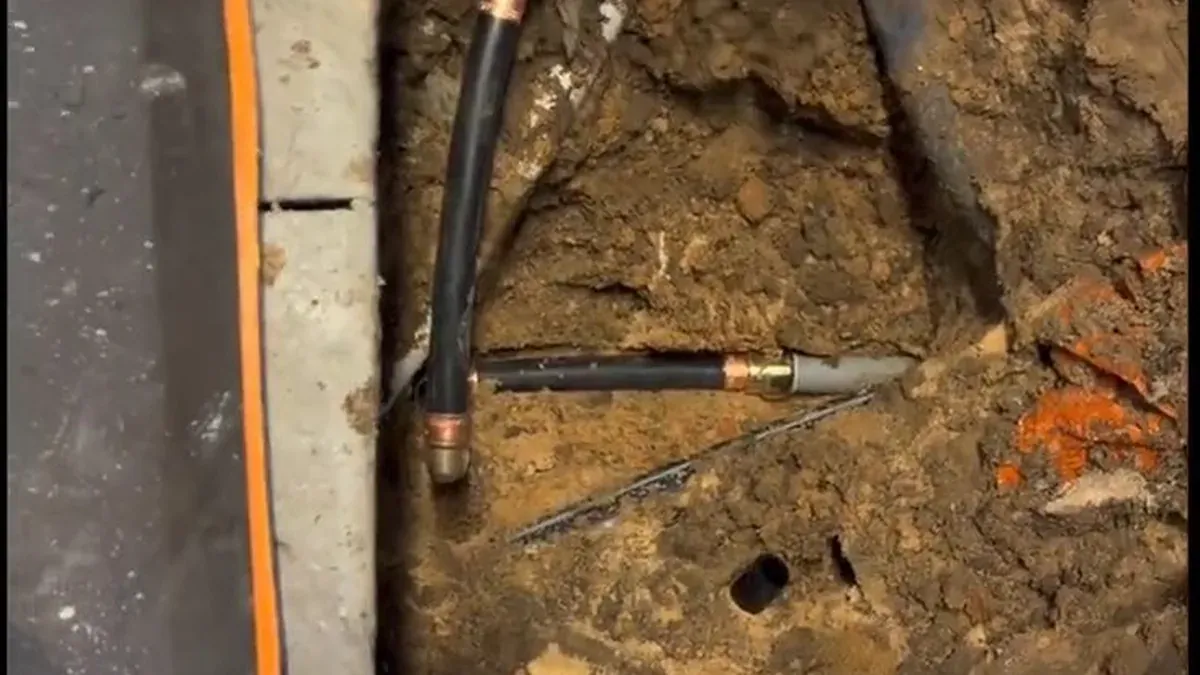
| Tunneling under the slab | Dig beneath the floor from outside to reach the line | When the floor must stay in place and the route allows it |
Ask how the floor will be restored and how long the water will be off. Rerouting or replacing a line is a plumbing change, so check with Community Development at (928) 634-5505 about a building permit.
What a long-running leak can do to the floor and the ground
Water that escapes under a slab does not go away. It can saturate the soil, raise humidity under the flooring and loosen the base the concrete rests on. Trapped moisture also gets into carpet, underlay and wood floors above.
If you notice new cracks, doors that stick or floors that have shifted, tell the plumber. Those signs can have other causes, and a structural specialist is the right person to judge them. The plumber’s job is to find and stop the water.
Once the line is fixed, wet flooring and drywall still need attention. water removal and drying covers that stage.
When the leak is in a sewer line instead of a supply line
Some under-floor leaks carry waste, not clean water. Signs include a sewage smell, slow drains and soft spots in the floor over a drain path. Those are handled through sewer line repair, and the camera work is different from a pressure test.
If the whole supply system keeps failing in different places, replacing it may make more sense than another patch. The repiping page explains how that decision is made.
Say what you feel and hear, then give your Cottonwood address.
Slab leak questions, answered plainly
What are the symptoms of a slab leak?
Common signs are a warm spot on the floor, the sound of running water when everything is off, a meter that moves with all fixtures closed, damp flooring and a higher bill with no new use. None of them proves a slab leak alone, so a meter test and a plumber’s pressure test come first.
Do I need a plumber for a slab leak?
Yes. Locating a line under concrete takes pressure testing and listening equipment, and the repair involves cutting, rerouting or lining pipe. You can help by closing the main shutoff and noting where the floor is warm or damp.
What is the difference between tunneling, rerouting and epoxy lining?
Tunneling digs under the slab to reach the pipe. Rerouting abandons the old line and runs a new one through the walls or attic. Epoxy lining coats the inside of the existing pipe. The plumber chooses based on the pipe, access and what is under the floor.
Is every leak near the floor a slab leak?
No. A crawl area, a failed fixture connection or a drain can produce the same signs. That is why the first step is confirming what the house sits on and testing before anyone cuts concrete.
Report what you found, and dispatch will line up a plumber.